How to Choose a Secure Digital Goods Marketplace
Узнайте, как выбрать безопасную торговую площадку для цифровых товаров, проверив наличие защиты покупателей, безопасности платежей, верификации продавцов и поддержки при разрешении споров.
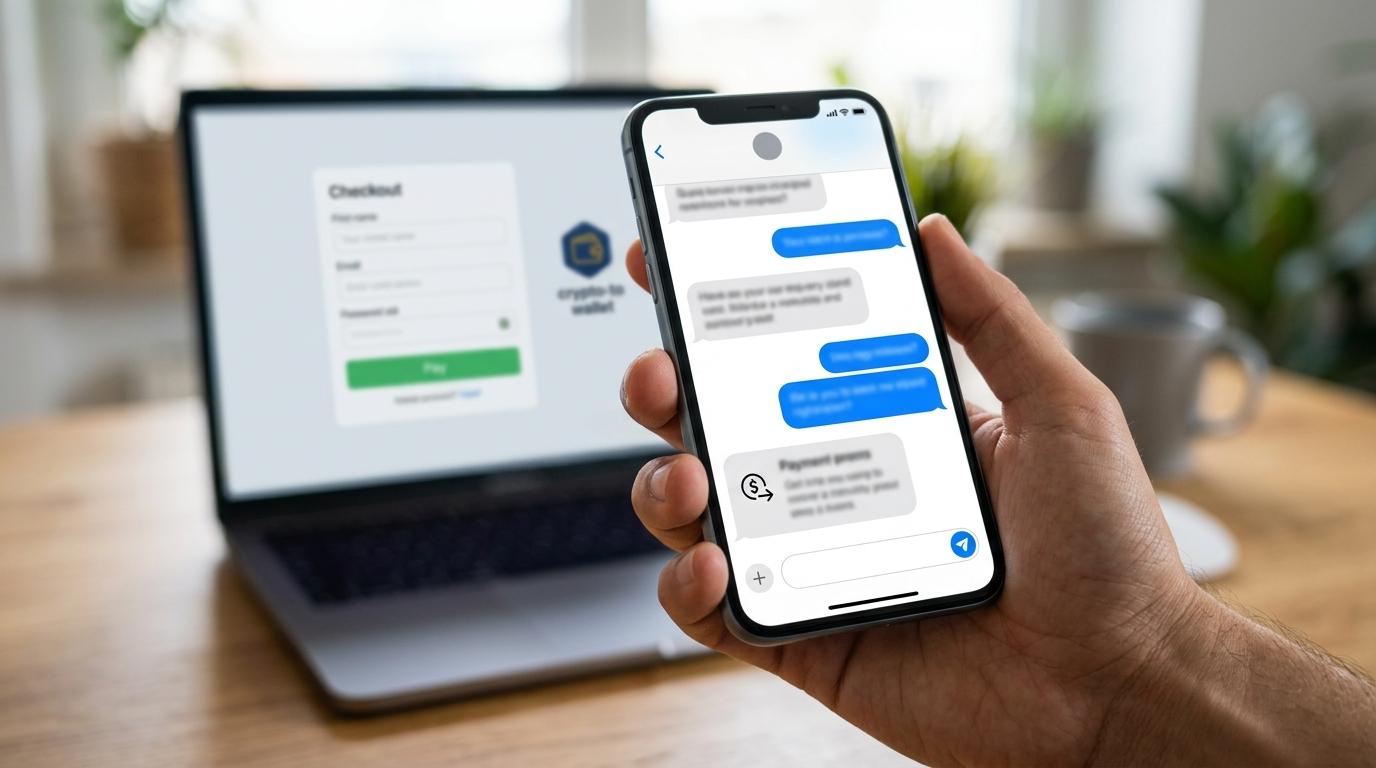
Buying digital goods is fast, convenient, and often global by default. A gamer in one country can purchase a key from a seller in another. A reseller can source platform accounts or software credits within minutes. That speed is part of the appeal, but it also raises the standard for marketplace security.
A strong marketplace does more than list products. It sets rules, verifies participants, protects payments, and gives buyers a clear path when something goes wrong. If those pieces are weak, even a simple transaction can become risky. If they are well designed, the marketplace becomes a trusted layer between buyer and seller rather than a passive directory.
# Why digital goods marketplace security matters
Digital goods are different from physical products in one important way: delivery often happens instantly, and recovery can be difficult if access fails, credentials are invalid, or ownership is disputed. That makes the marketplace itself central to trust.
Official consumer guidance supports that view. The Federal Trade Commission advises buyers to check refund and return rules before purchasing and to confirm who will help if a problem appears. Some marketplaces actively handle disputes and refunds. Others leave buyers and sellers to sort things out on their own. That distinction matters more than many shoppers realize.
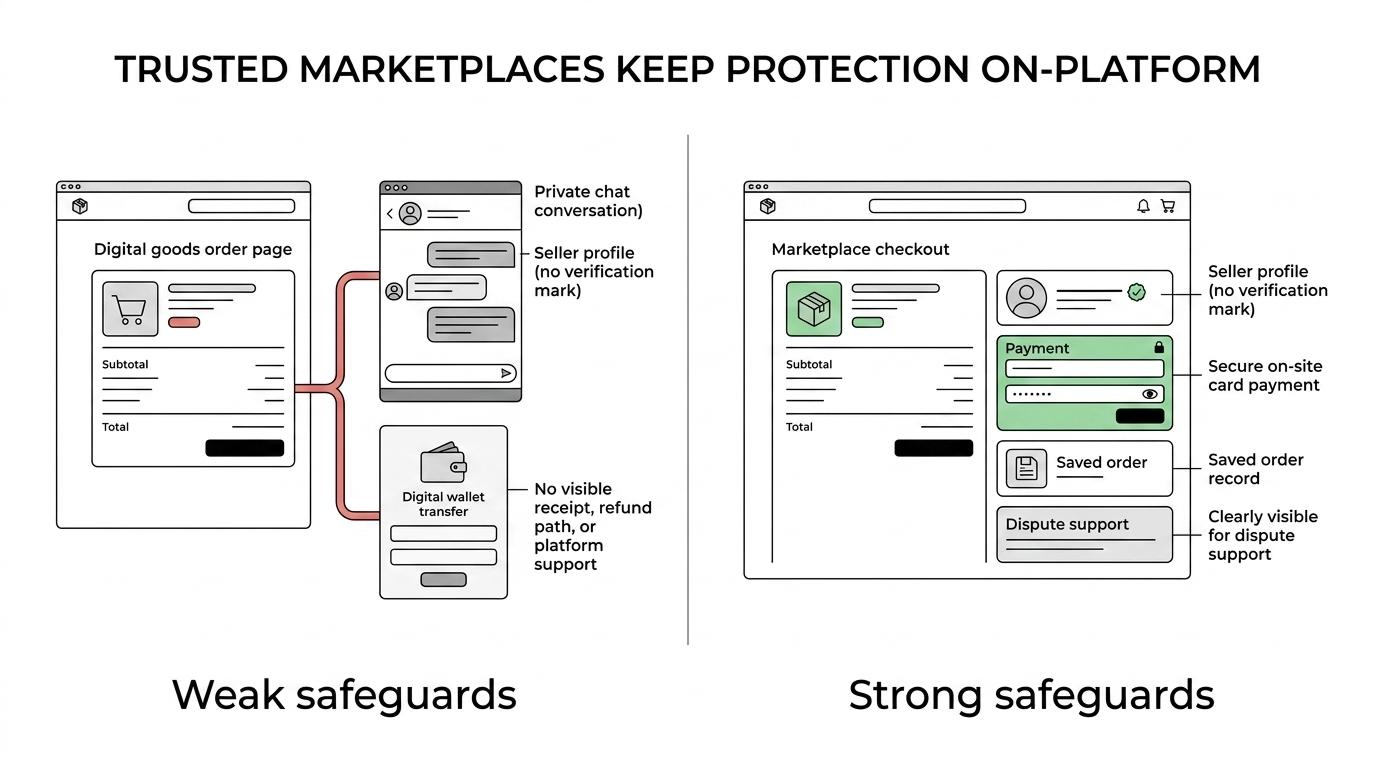
Security also involves money movement, not just product listings. The FTC warns buyers not to pay outside a marketplace’s payment system, because doing so can remove site protections and reduce refund options. In practical terms, a secure digital goods marketplace is one that keeps the transaction inside its protected environment, verifies who is selling, and offers a defined process for disputes.
# Buyer protection policies in a digital goods marketplace
The first thing to examine is not the product catalog. It is the policy framework behind the catalog.
A reliable marketplace should explain, in plain language, what happens if a delivered account does not match the listing, if a key is invalid, if access is lost right after delivery, or if the seller becomes unresponsive. Buyers should not have to guess whether a refund, replacement, or manual review is available. Clear policy language is a sign that the platform expects real-world issues and is prepared to manage them.
This is where many marketplaces separate themselves. Some act as active intermediaries. Others simply host listings and step back once payment is sent. The FTC has been clear that buyers should verify who handles problems before buying. That means reading the marketplace rules, not just the seller description.
Good buyer protection usually includes a few visible signs:
- Refund terms: Clear timing, conditions, and exclusions
- Dispute process: A defined way to report issues and submit evidence
- Support ownership: The marketplace states whether it will step in
- Delivery confirmation rules
- Seller accountability measures
If a site is vague about refunds, silent about disputes, or pushes all responsibility onto private chats between buyer and seller, that is a weak security signal.
# Payment security features to compare before checkout
Payment security is one of the easiest areas to evaluate, because strong marketplaces tend to make their controls visible.
The FTC recommends safer payment methods, including credit cards and secure online payment systems that offer buyer protection if something goes wrong. It also warns against wire transfers, gift cards, cash reload cards, and cryptocurrency in cases where recovery is difficult or impossible. A marketplace that encourages off-platform payment is asking the buyer to give up a major layer of protection.
Card handling matters too. The PCI Security Standards Council sets requirements for organizations that accept or process payment cards. PCI DSS is built around the operational and technical controls needed to protect cardholder data. Buyers do not need to audit a platform themselves, yet they should still look for signs that payment security is treated as serious infrastructure rather than an afterthought.
Here is a practical comparison:
| What to check | Strong signal | Risk signal |
|---|---|---|
| Payment flow | Payment stays inside the marketplace | Seller asks for direct transfer |
| Buyer protection | Platform states how claims are handled | No refund path is visible |
| Card security posture | Secure checkout and clear payment handling standards | Informal checkout or inconsistent payment pages |
| Proof of transaction | Order history, receipts, and timestamps are saved | Little or no transaction record |
| Reversible payment options | Credit card or protected online payment system | Wire transfer, gift card, crypto only |
A secure checkout experience should feel structured. The order page, payment step, confirmation, and delivery record should all exist inside one coherent system. If the process suddenly shifts to private messaging or an unrelated payment channel, trust should drop immediately.
# Seller verification and identity assurance standards
The next question is simple: who is actually selling the product?
Seller verification is one of the strongest predictors of marketplace quality because many fraud issues begin with identity uncertainty. NIST’s digital identity guidance focuses on identity proofing, authentication, and privacy-aware design. Those principles are highly relevant to marketplace operations. A platform does not need to expose every internal process, but it should show that seller identity and account control are taken seriously.
That usually means the marketplace has a way to verify sellers before they list at scale, monitor account behavior, and protect access to seller dashboards. Authentication controls, login protections, and fraud review all support a safer environment for both sides of the transaction.
Useful signs of seller verification often include:
- Verified seller labels
- Store history and transaction volume
- Ratings and written feedback
- Authentication controls: Protections for seller logins and account access
- Identity review: Checks that reduce fake or duplicate seller profiles
Verification is not just about trust badges. It is about reducing fake listings, preventing account takeovers, and making sure there is a real accountable party behind a transaction.
# Customer support and dispute handling for digital goods transactions
Support quality becomes visible only when something goes wrong, which is why it should be checked before buying, not after.
A secure marketplace should explain how to open a dispute, what evidence is useful, how long review may take, and what outcomes are possible. The FTC advises consumers to save purchase documents, emails, chat logs, and screenshots, including dates. That advice fits digital goods especially well, because delivery proof, listing descriptions, and support messages can all become critical in a claim.
Support availability also matters. A marketplace serving global buyers and sellers benefits from responsive service and clear communication channels. Round-the-clock support, fast case acknowledgment, and structured ticket handling can make a real difference when access credentials, timing, or delivery status are disputed.
When comparing support quality, look for a workflow rather than a promise. “We are here to help” sounds nice. “Open a case from your order page, attach screenshots, and receive a response within a stated timeframe” is much stronger.
# Marketplace safeguards that reduce fraud risk
Security is strongest when policy controls and technical controls work together.
Policy controls include refund rules, dispute procedures, seller standards, and enforcement actions. Technical controls include protected checkout, account security, transaction logging, and fraud monitoring. The safest marketplaces use both. They do not rely on seller goodwill alone, and they do not expect buyers to self-police the platform.
For digital goods, escrow-style handling is often a valuable layer. When the marketplace holds the transaction inside its own system until delivery conditions are met, both buyer and seller gain more structure. Instant delivery can still work within this model when issuance, order records, and release logic are automated. That combination of speed and protection is often what separates mature platforms from improvised ones.
There is also a customer experience angle here. NIST guidance recognizes that identity systems must consider user experience alongside security and privacy. That is relevant because confusing verification, vague delivery steps, or inconsistent support channels can push users into unsafe workarounds. Good security should feel deliberate and usable.
# Red flags that suggest an unsafe digital goods marketplace
Some warning signs are easy to miss because they are framed as convenience. A seller might offer a “better deal” off-platform. A marketplace may hide policy details in vague terms. A listing may look attractive while offering no real seller history. These patterns are common enough that buyers should treat them as structured risk indicators, not minor quirks.
A marketplace becomes far safer when it resists these patterns instead of normalizing them.
Watch for these red flags during evaluation:
- Off-platform payment requests: The seller asks to continue on Telegram, Discord, email, or direct wallet transfer
- Unclear dispute ownership: No one explains whether the platform will step in
- Weak seller transparency: No ratings, no store history, no verification status
- Crypto-only checkout with no buyer recourse
- Missing order receipts or poor record keeping
- Support that exists only through informal messages
One or two weak signals may not always mean fraud, but a cluster of them usually means the marketplace is not designed for safe trading at scale.
# A practical checklist for comparing digital goods marketplaces
The smartest way to choose a marketplace is to compare a few platforms side by side before making the first purchase. That keeps emotion out of the decision and turns security into a repeatable standard.
Use this short checklist as a screen:
- Read the refund and dispute rules before browsing deeply.
- Confirm whether payments stay inside the marketplace.
- Check if the platform uses safer payment methods with buyer protection.
- Review seller verification, ratings, and account history.
- Look for strong support access and clear case handling.
- Make sure transaction records, receipts, and messages are easy to save.
This kind of checklist is especially useful for buyers who purchase often, resellers who need predictable fulfillment, and anyone sourcing higher-risk digital items where validity, ownership, or recovery windows matter.
# What a confident purchase experience should feel like
A secure marketplace usually feels organized long before checkout. Listings are structured. Seller profiles provide context. Payment stays on-site. Support is easy to find. Policies answer hard questions directly.
That confidence is not built from marketing language alone. It comes from visible mechanisms: verified sellers, protected payment flows, clear buyer protection, saved order records, and responsive dispute help. When those parts are present, buyers can move faster without becoming careless.
For digital goods, speed and security do not need to compete. The best marketplaces are built to provide both, giving buyers a straightforward path from search to delivery while keeping protection intact at every step.